5 Steps to Start Day Trading From Scratch Without Experience
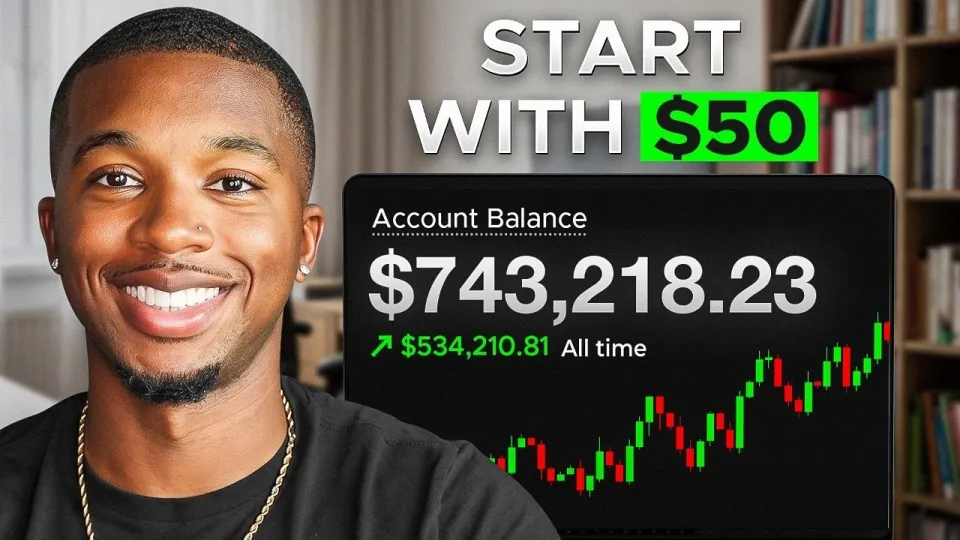
Video: Easiest Way To Start Day Trading From Scratch (Exactly What I Did)
Want articles like this for your own video to promote it on YouTube and Google? Order them through the Telegram bot @sat_sit_bot. The bot writes and publishes the articles itself (with your YouTube video embedded) on popular topical websites (no ads). Your first 50 articles are free.
Day trading from scratch is easier than most people think: pick one market, learn one setup, risk 1–2% per trade, and practice on a demo account for at least a month before going live. The fastest path is to copy a proven process instead of inventing your own — that is exactly what Jooviers Gems breaks down in the video "Easiest Way To Start Day Trading From Scratch (Exactly What I Did)". If you want the exact trades and a structured walkthrough, the creator shares them through his Inner Circle.
What day trading actually is and why most beginners quit
Day trading means opening and closing a position within the same trading session, so you never hold overnight risk. You can do it with stocks, futures, or forex — the mechanics are the same: you buy low and sell high (or sell high and buy low) within hours or minutes.
Most beginners quit because they treat trading like a casino. They jump between markets, use random indicators, and risk 20–30% of their account on a single idea. The reality, as the video points out, is that trading is a skill built through repetition: screen time, backtesting, and a fixed routine. The viewers who left comments under the video echo this — one wrote that after almost a month of demo trading and backtesting they were already up over $8,000 on a practice account, including losses. That is the correct order of operations: practice first, real money later.
5 steps to start day trading from scratch
These are the five core steps that turn a complete beginner into someone who can place a trade with a plan.
- Choose one market and one timeframe. Futures like the S&P 500 (ES) or Nasdaq (NQ), major forex pairs like EUR/USD, or liquid large-cap stocks all work. Stick to one for at least three months.
- Learn to read a candlestick chart. A candle shows four prices: open, high, low, close. A green candle closes above its open; a red candle closes below it. Long wicks mean rejection; short bodies mean indecision. This single skill replaces a dozen indicators.
- Pick one setup and master it. Examples: a reversal off a key support level, a breakout of the previous day's high, or a pullback to a moving average. You do not need five strategies — you need one you can execute 100 times.
- Define risk before entry. Set a stop-loss at the level that proves your idea wrong, and size the position so the loss is 1–2% of your account. If your account is $1,000, your maximum loss per trade is $10–$20.
- Track every trade. Log the setup, entry, exit, and your emotional state. The creator recommends a dedicated trading journal — the video description points to Wagmitrader (code WAGMI) as the tool he uses.
How much money you need and how to get funded
You do not need a large account to start day trading, but you do need enough to respect risk rules. Many brokers let you open an account with $100–$500, and micro futures contracts (like MES or MNQ) let you trade the S&P 500 or Nasdaq with a fraction of the margin of a full contract.
The alternative route — and the one the video leans into — is prop firm funding. Instead of saving $25,000 to day trade stocks and avoid the pattern day trader rule, you pay an evaluation fee to a prop firm, pass a profit target while respecting a drawdown limit, and then trade the firm's capital for a profit split. The creator links to The Edge Funder (https://www.theedgefunder.com/) for instant funding and to FunderPro for forex-funded accounts. The trade-off is real: evaluations cost money, and most people fail the first attempt because they oversize positions trying to hit the target too fast.
The mistakes that blow up beginner accounts
Oversizing is the number one killer. A trader who risks 10% per trade only needs a five-loss streak — which happens to everyone — to lose half the account. Professionals risk 0.5–2% so that a normal losing streak is survivable.
Other common mistakes:
- Revenge trading after a loss, doubling size to "win it back".
- Switching strategies every week instead of testing one for 50–100 trades.
- Trading without a stop-loss, hoping price comes back.
- Copying random signals from social media without understanding the setup.
- Comparing yourself to others. One commenter noted that the best advice is to ignore the lifestyle posts on Instagram and just stick to the course and practice.
What beginners actually ask before their first trade
The most repeated questions in the comments come down to three themes: how long until profitable, whether a course is worth it, and whether you can start with a tiny account.
On timing: expect 6–12 months of consistent screen time before results become stable. One viewer who had been demo trading for a month described it as "the right place for beginners" — that patience is the norm, not the exception. On courses: several commenters said a single well-structured video taught them more than a paid week-long course, which is why free structured content plus a journal matters more than expensive programs early on. On small accounts: you can start with $100–$500, but the goal in the first months is not profit — it is proving you can follow your own rules. A trader who can't follow rules on a $500 account won't follow them on a $50,000 funded account either.
Useful links
- Inner Circle — all of Jooviers' trades and full breakdowns
- Instant funding evaluation: https://www.theedgefunder.com/
- The Edge Funder Discord community: https://discord.gg/WpJXHKK7f2
- Creator's Instagram: https://www.instagram.com/joovier_
- Recommended forex broker: https://herofx.co/joovier/
Final thoughts
Starting day trading from scratch is a process, not a shortcut: pick one market, learn candles, master a single setup, risk 1–2% per trade, and journal everything. Expect months of demo trading before real money, and treat a funded account as a test you earn rather than a lottery ticket. The video by Jooviers Gems is one of the clearest beginner walkthroughs on YouTube, and the creator's own words in the comments — sharing both wins and losses — are the reason it resonates. If you want to follow the exact trades and continue the education, join the Inner Circle here and start with step one today.
Key takeaways
- Day trading means opening and closing positions within the same session, often in minutes or hours.
- Beginners should spend 1–3 months on a demo account before risking real money.
- A simple strategy uses one or two setups, like a candlestick reversal at a key level.
- Risk no more than 1–2% of the account per trade to survive losing streaks.
- Prop firms like The Edge Funder let you trade funded capital after passing an evaluation.
Questions & answers
How much money do I need to start day trading?
You can open a broker account with $100–$500, and micro futures contracts let you trade major indices with much smaller margin. However, the first goal is not profit — it is proving you can follow risk rules. Many beginners also use prop firm evaluations to access larger capital without risking their own savings.
How long does it take to become profitable as a day trader?
Most traders need 6–12 months of consistent screen time, backtesting, and journaling before results stabilize. A common benchmark is 50–100 executed trades of the same setup on a demo account before going live. Rushing this stage is the main reason beginners blow up accounts.
Is a paid trading course worth it for a beginner?
Not necessarily at the start. Many viewers report learning more from a single well-structured free video than from a week-long paid course. What matters most early on is a repeatable process, a trading journal, and enough repetitions — not the price of the material.
Can I day trade with a small account and still get funded?
Yes. Prop firms like The Edge Funder let you pass an evaluation and trade the firm's capital for a profit split, which removes the need for a large personal account. The catch is that evaluations cost money and most people fail the first attempt by oversizing positions to hit the target too fast.
Source: Easiest Way To Start Day Trading From Scratch (Exactly What I Did) · Markdown version